
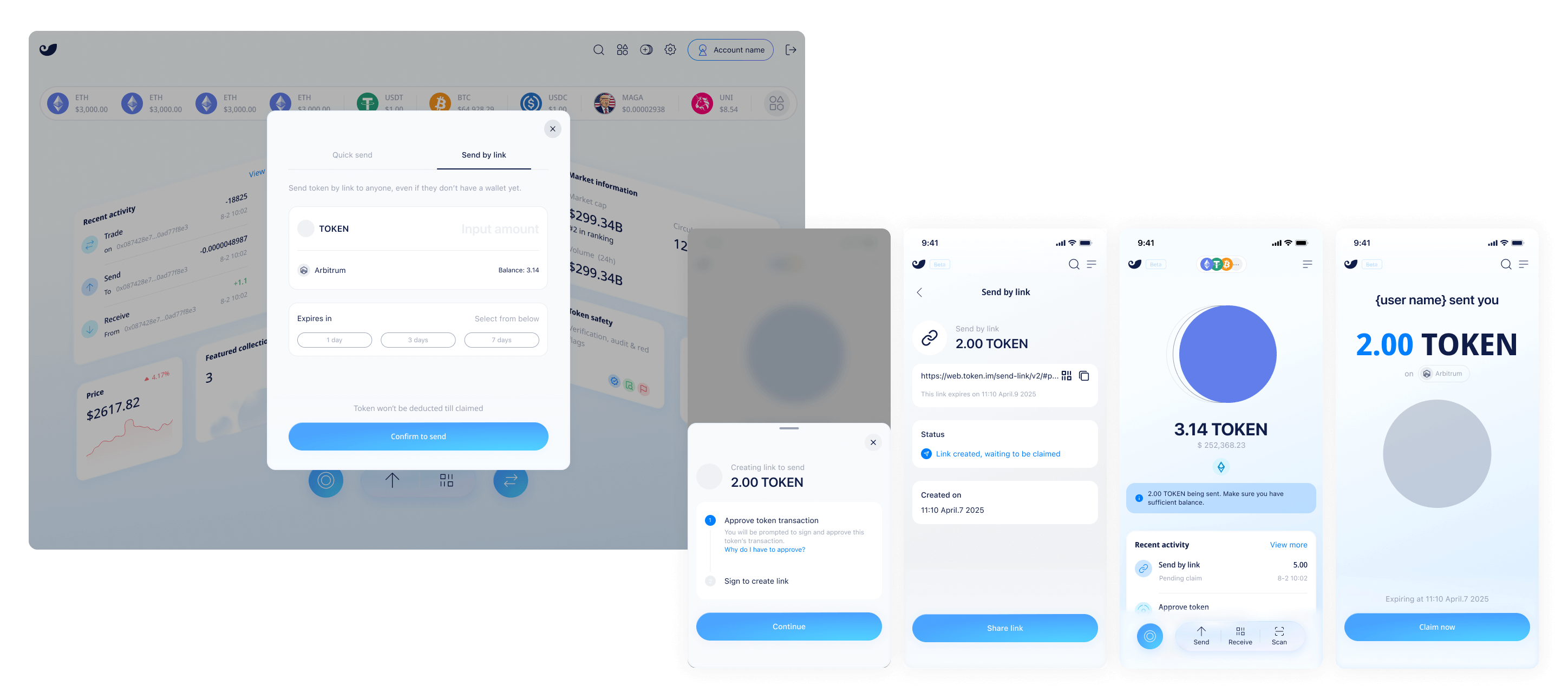
About imToken Web
Like Kindle for books, people use Kindle to read and enjoy e-books anytime, anywhere,the target users will utilize the imToken Web to read and enjoy tokens anytime, anywhere.Compared to imToken wallet, it is a simple and accessible “human-blockchain-interface” for anyone. Powered by Account Abstract, the multi-chain webapp enables them to:
- Send to anyone
- Action on token from anywhere
- Find holdings in one place
- Explore millions more at fingertips
What was the goal of the project?
imToken is an active member of the Ethereum community and with ETH Taipei coming soon. Team is trying to showcase more features that amplifies with the latest trend in the community. “Send to anyone” via interop and claimable link is the focus.
What were the problems?
Cross-chain token transfer from one account to another has been a long lasting narrative in web3. This is especially true in the Ethereum ecosystem from L1 to L2. Users naturally are paused by the high barrier of figuring out complicated token relations, gas fees, multi-steps process, not to mention that they need to understand mnemonics based EOA wallet set up.
(We were not looking at user data since by that time webapp is in beta stage, and the focus is to showcase leading experience to community.)
Initial exploration
While the lab team was busy working on the claimable link smart contract, I initiated a design exploration internally that involve designer from wallet app, all webapp team member, MKT and CEO of the company.
Users and mental model
There are 3 types of users that webapp targets.
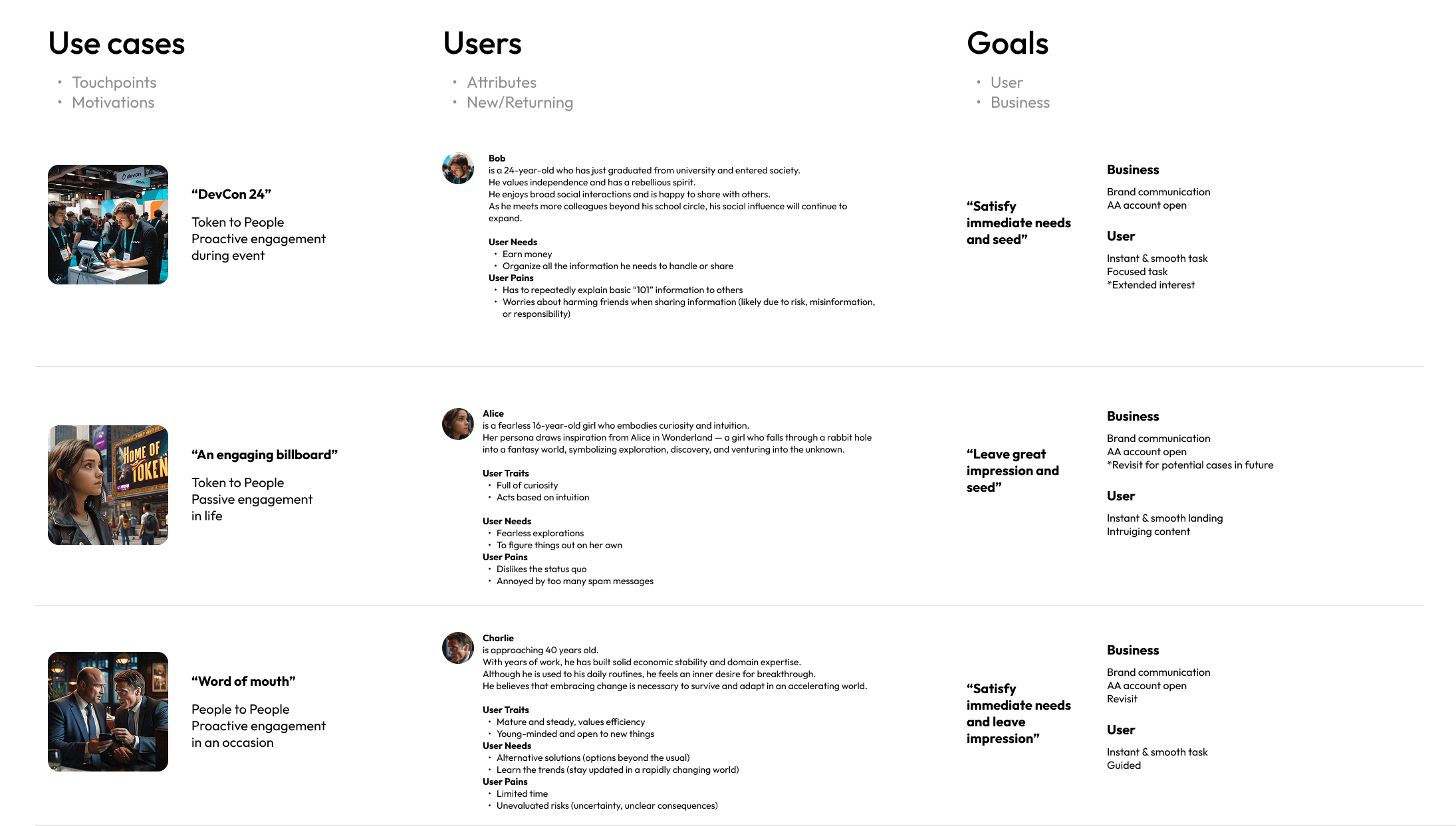
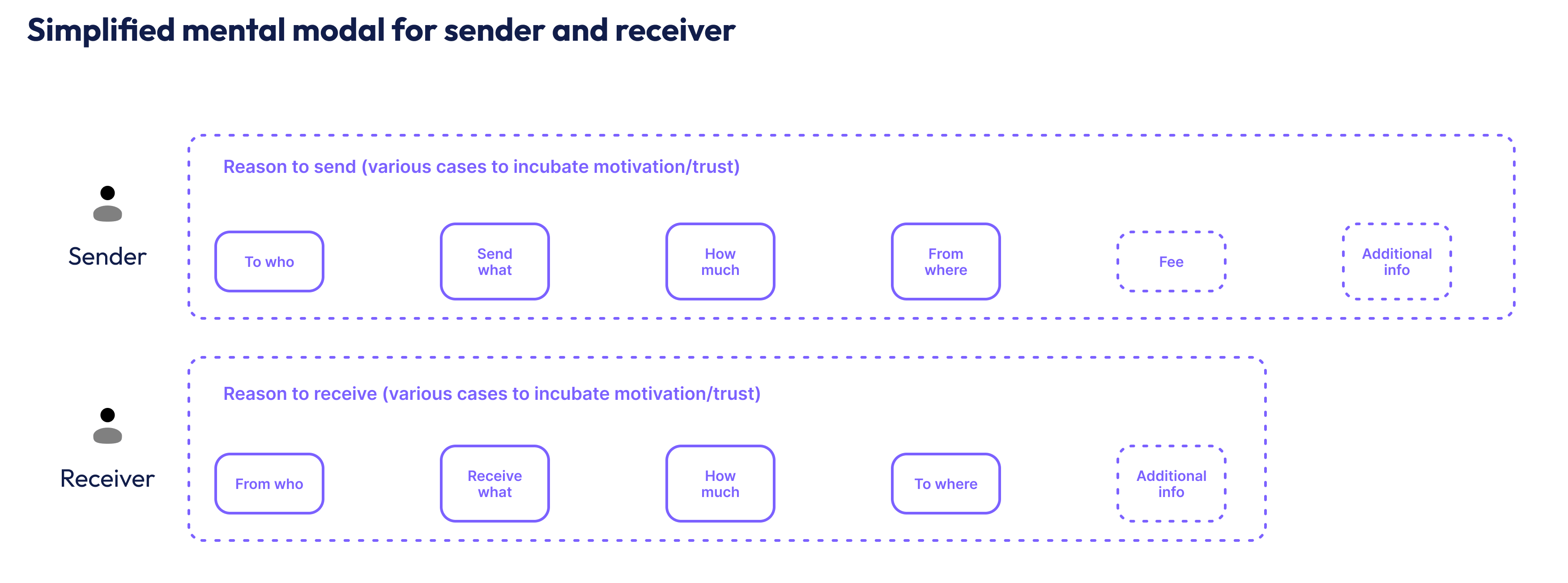
But in this project, we take a different angle and create specialized role-based aspects, sender and receiver and ask this question: what actually do they want?
As goal of exploration, I wanted to push the limit of our understanding of best sending experience so that we can then get better balance with technology. The overall mental model is cultivated via the history of send/receive. And if we break it down, there are a few core elements, empowered by the reasons which are the use cases that help build motivation and trust.
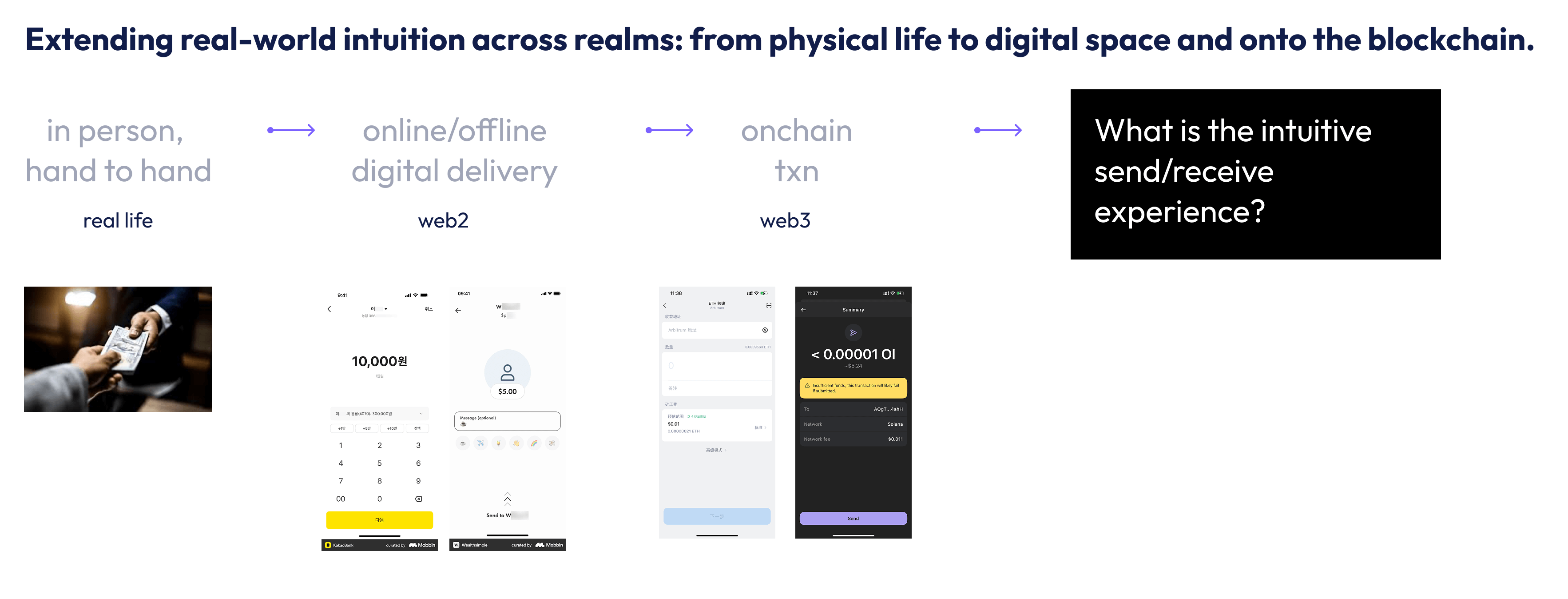
Users have been long educated with the web2 version of sending and receiving. All these evolvement create challenges for all web3 interactions
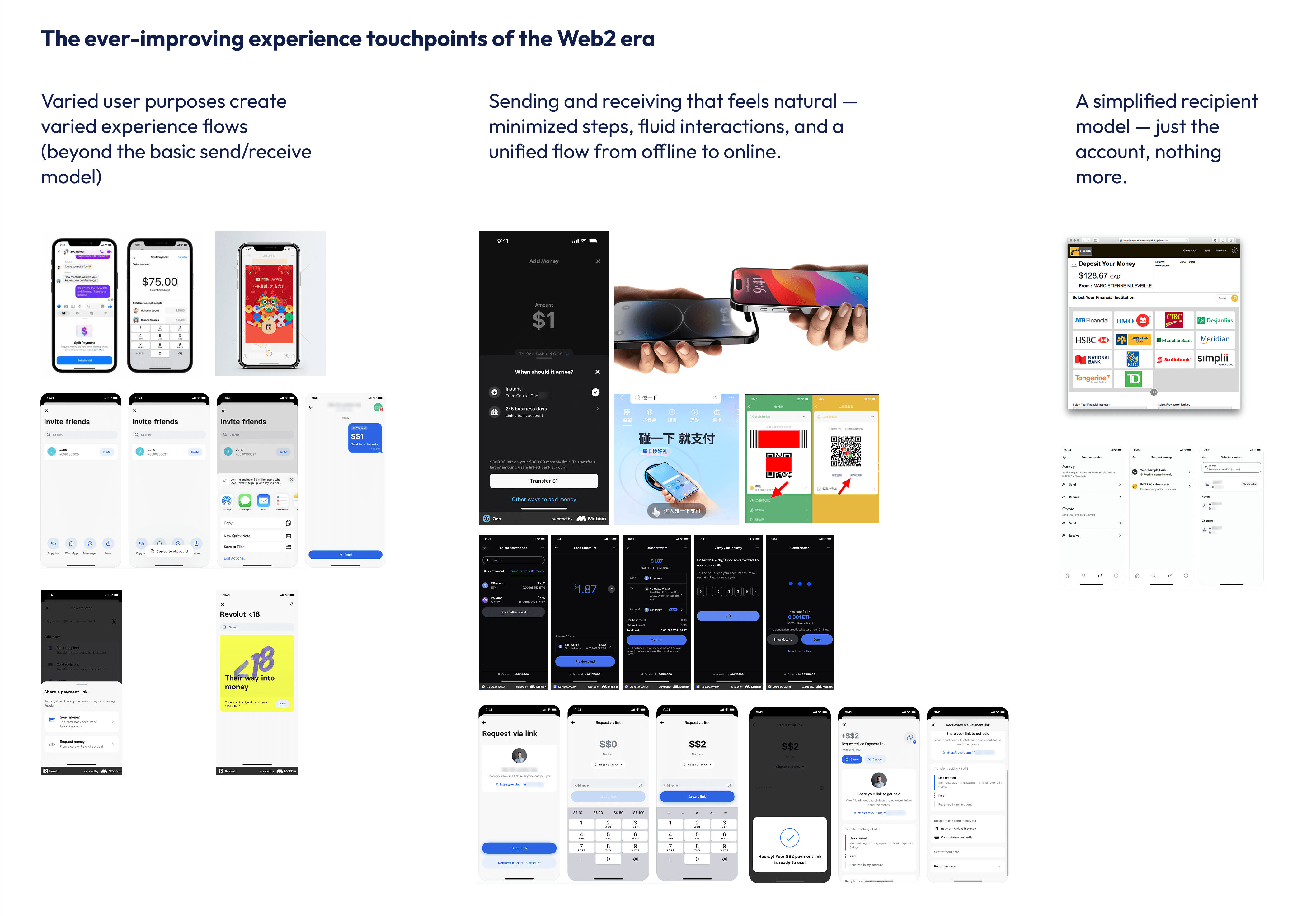
With these, the design directions focus on :
- Mutual directional transaction interaction
- Low awareness of process
- Configurable
- Spreadable across web2 channels
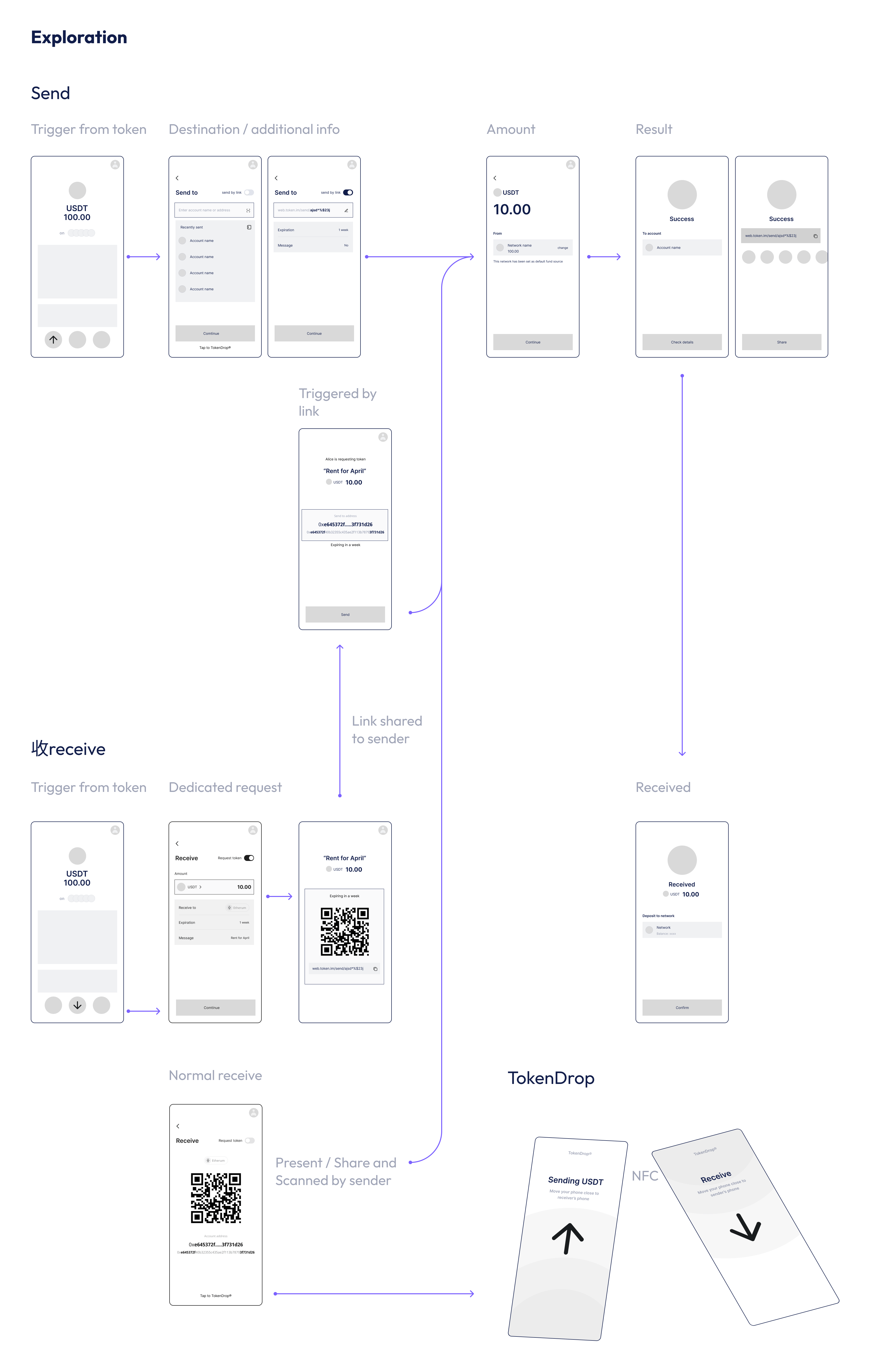
First-mover advantage with the challenge
Later on, the lab team brought their technical PoC to the webapp team. As I previously predicted, they also have a basic front end along with it. By having their exploration first, the ideal experience left a good impression on stakeholders, ahead of time and though later there were many technical constraints, we manage to keep a major part of it. One of them being that we determined to use relayer and sponsor the gas fee so that users during ETH Taipei will have a smoother send experience, since they are new users landing.

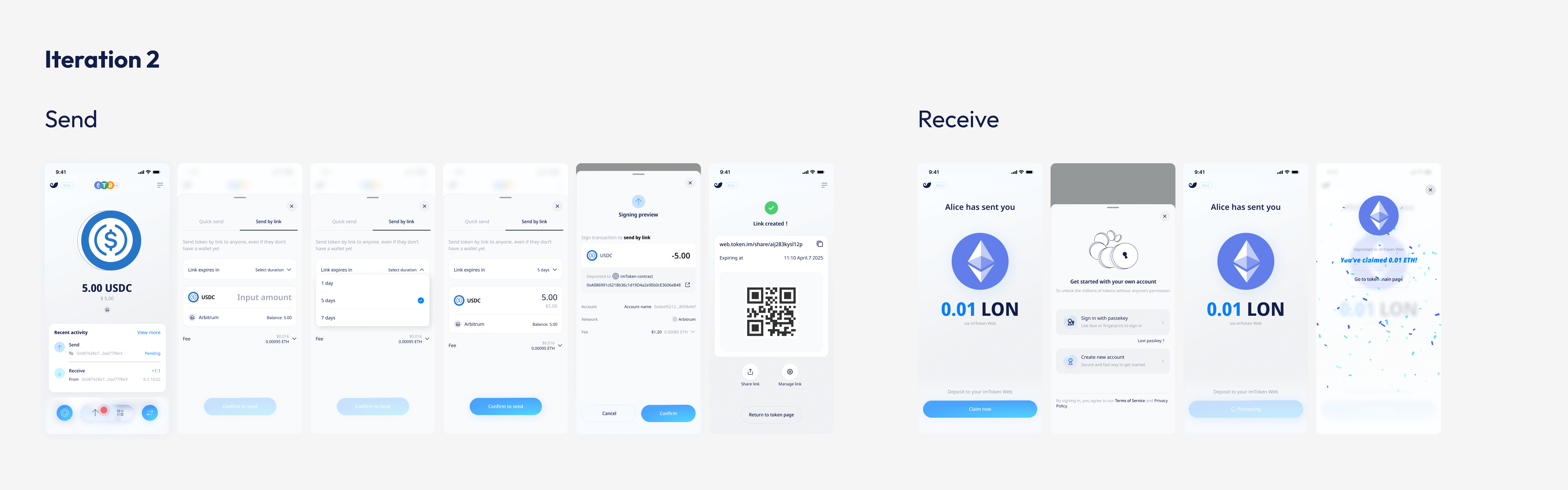
We received generally good feedback on the showcase but also there are quite some voices on experience details.These are documented into backlog items in Jira and lead us to another iteration.
A second battle between decentralized and centralized
While the first version quite stick to original design direction, our CEO wants a more decentralized solution which means:
- All sharable links do not go through centralized url shorterner service.
- No relayer adoption, user has to manually sign to claim
- No advanced token deposit to imToken contract, sender has to sign permit2
Another approach of adopting web2 in web3
Another approach: add web2 patterns to granular touchpointsSo this is a classic decentralized vs centralized discussion. I stated clearly the concern for conversion rate and completion rate but also understand the choice that follows company’s positioning and mission. As a balance, the flow has to be broken down and i identified potential “web3 trap” to users. Those are essentially balance between trust/security and simplicity. Guidance is introduced to minimize frictions in the pattern of interactive indicator and content, so that users don’t get overwhelmed by entire flow confusion, we serve them bit by bit.
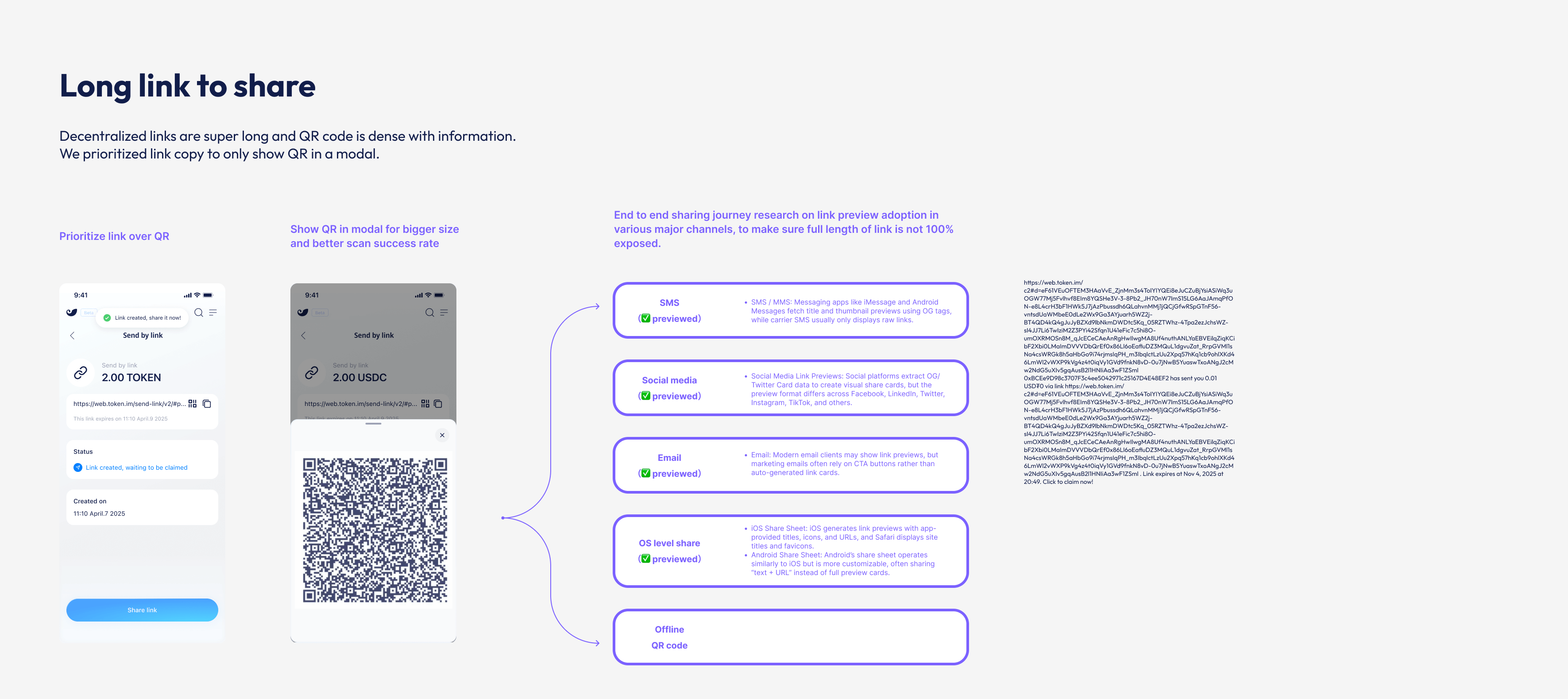
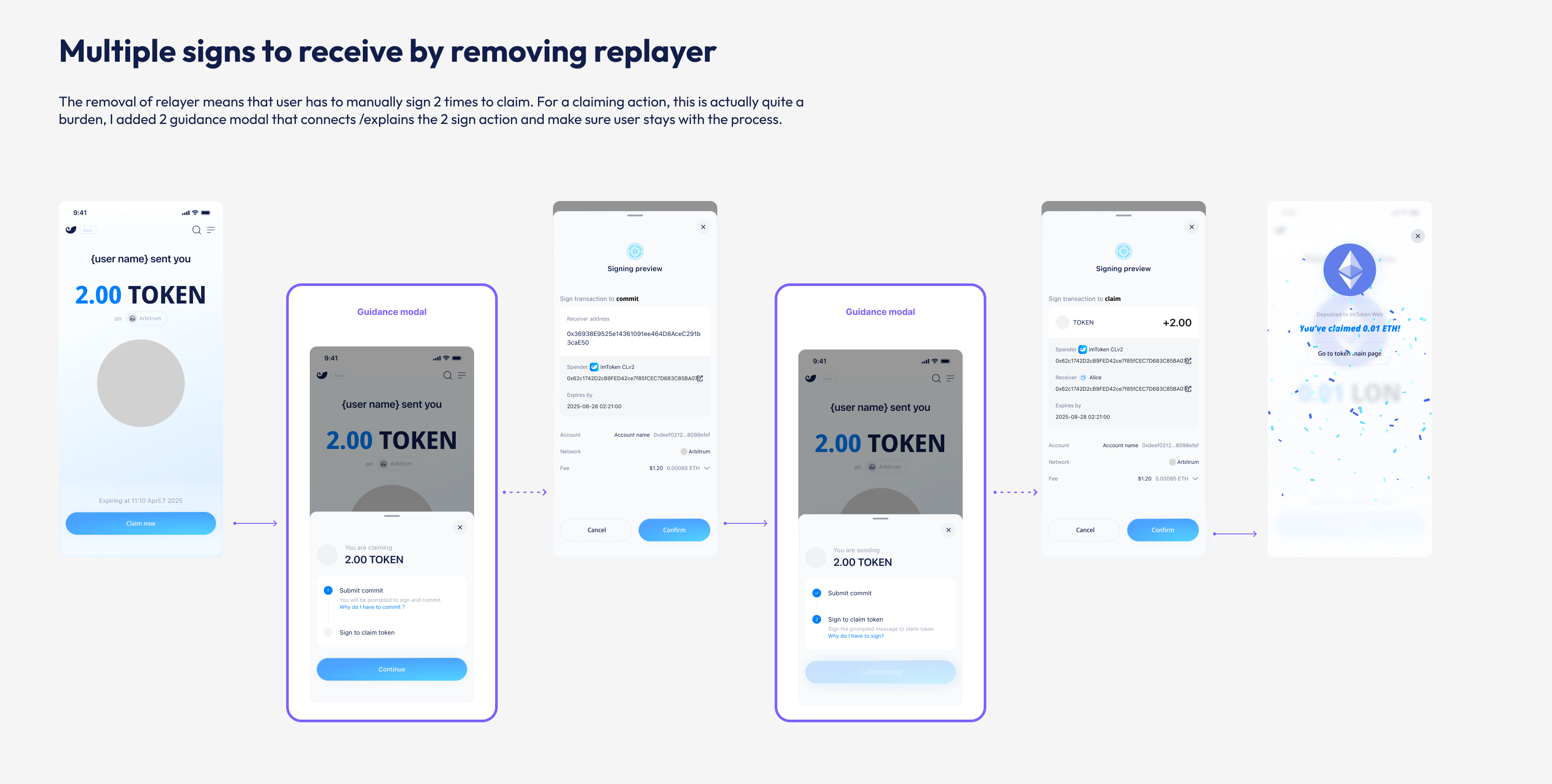
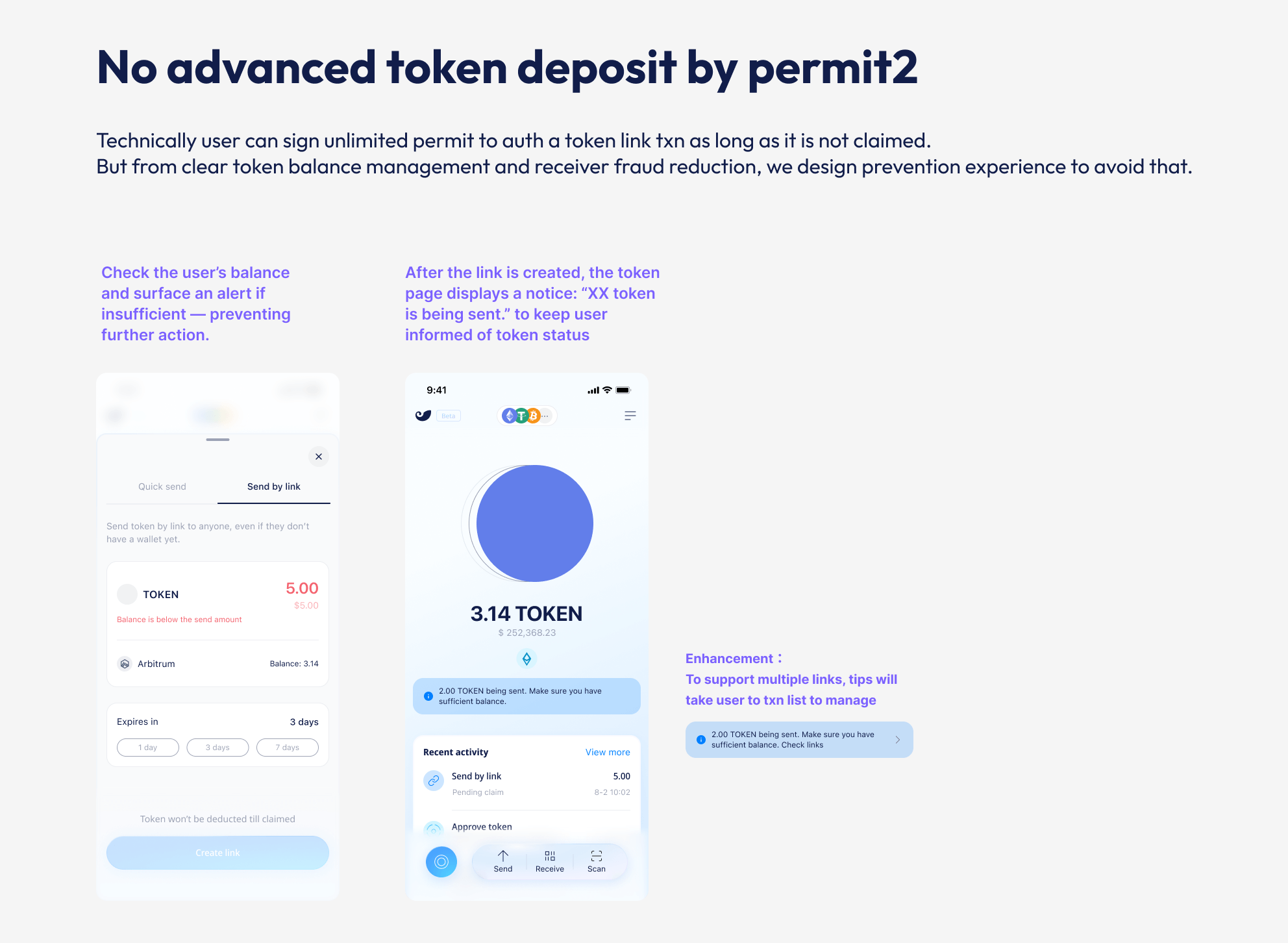
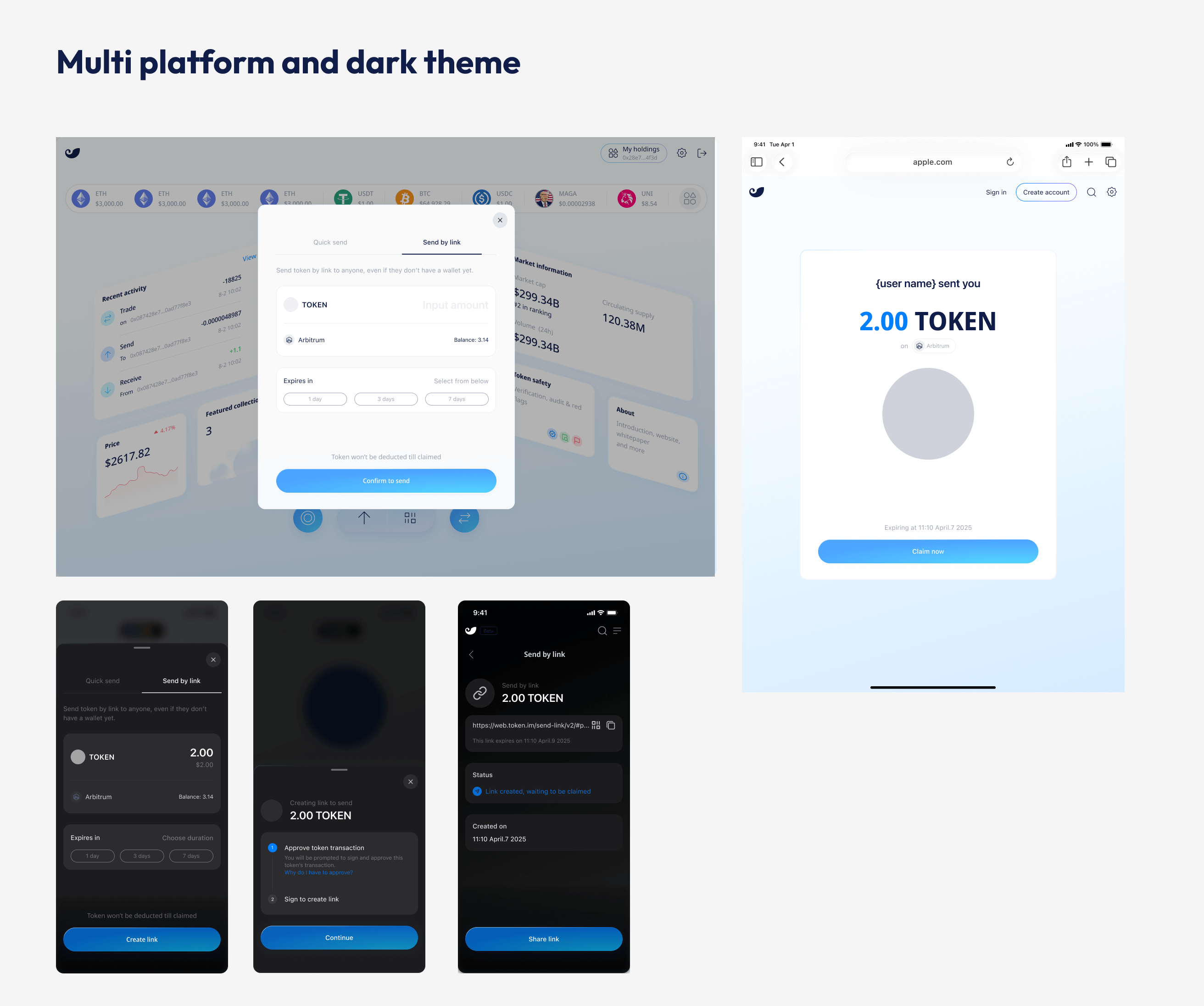
Before launching the new iteration, we hosted another round of internal dogfooding. Improved a couple of details and launch it with marketing effort on promoting. The feedback this time, though with decentralized changes, are pretty good, especially voices from our community users.
Try this at https://web.token.im
Reflection on design principles
Coming from traditional payment experience, I spent a long time adjusting my design principles towards web3 & crypto experience along the way. From the efforts to build a “unique web3” experience (from UI vibe to UX flow), to realizing common users’ barrier transitioning from web2 and bringing more web2 patterns.
A lot of web3ers do have misunderstanding on how blockchain can be more inclusive. We don’t usually experience TRUMP coin moment when super main stream influence can “force” new users to onboard blockchain. There is always a reason for CEX to be widely adopted.