
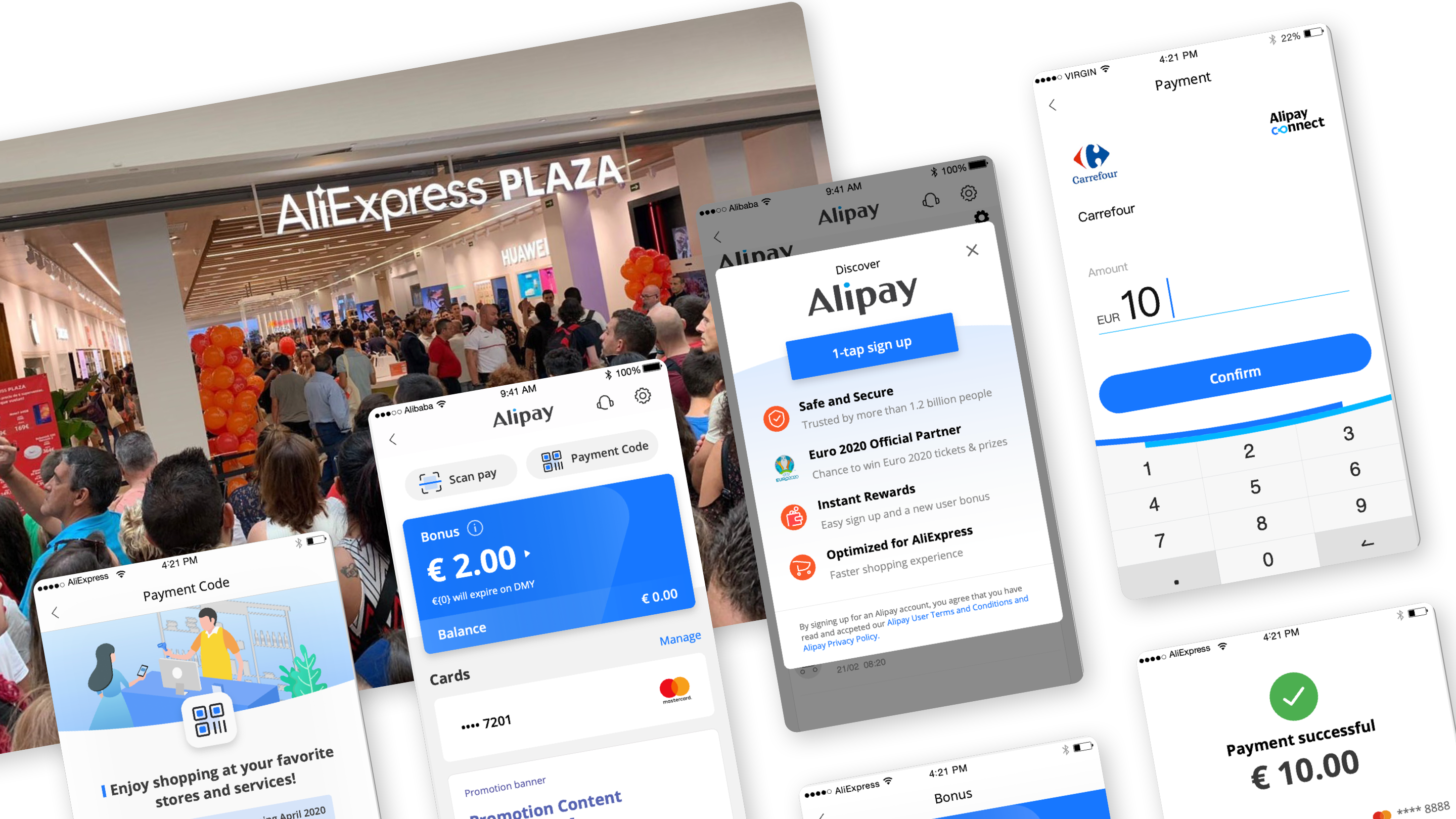
About the project
AliExpress is second leading cross-boarder e-commerce platform in Europe, especially in countries like Spain, France, Poland, Italy (in DAU, Amazon ranks 1st). With online business and user numbers meeting barriar, AE is looking for ways to grow its business out of the online world. Unlike China and many Asian countries, online retailer only makes up a very small portion of all retailer business and people still conduct their "offline consumer behavior" a lot. With the Euro 2020 coming then (later postponed due to Covid), the company is hoping to leverage offline consumer acquisition during Euro 2020 period and convert them to online AliExpress users with promotions.

Product and goals
To connect physical stores to online business, one of the key connections are funds. Alipay as the affiliated company with AliExpress, has got licence with its Luxembourg entity and has got existing merchant coverage. Therefore the company planned to launch an e-wallet built in AliExpress to help absorb offline consumer to online business.
User problems
Before moving on with design, the business strategy faces some obvioud user challenges:
- For any new product, or more specifically, an e-wallet, the first thing comes to users is "Why this?". Users are sensitive to financial product, even though it's built in a more-known brand called AliExpress.
- Even though wallet penetration in each country is not low, but there are still majority of people who hasn't had digital wallet experience before. It's difficult for them to be activated for payment at first entry.
Research and exploration
Me and the team (a group of 2, me as UX the other as UI) clearly understands what's blocking and with that alignment, we started with desktop research and then reached out the research team for a in-depth field research with us all travelling to Spain, France and Italy.
Desktop research mainly focuses on:
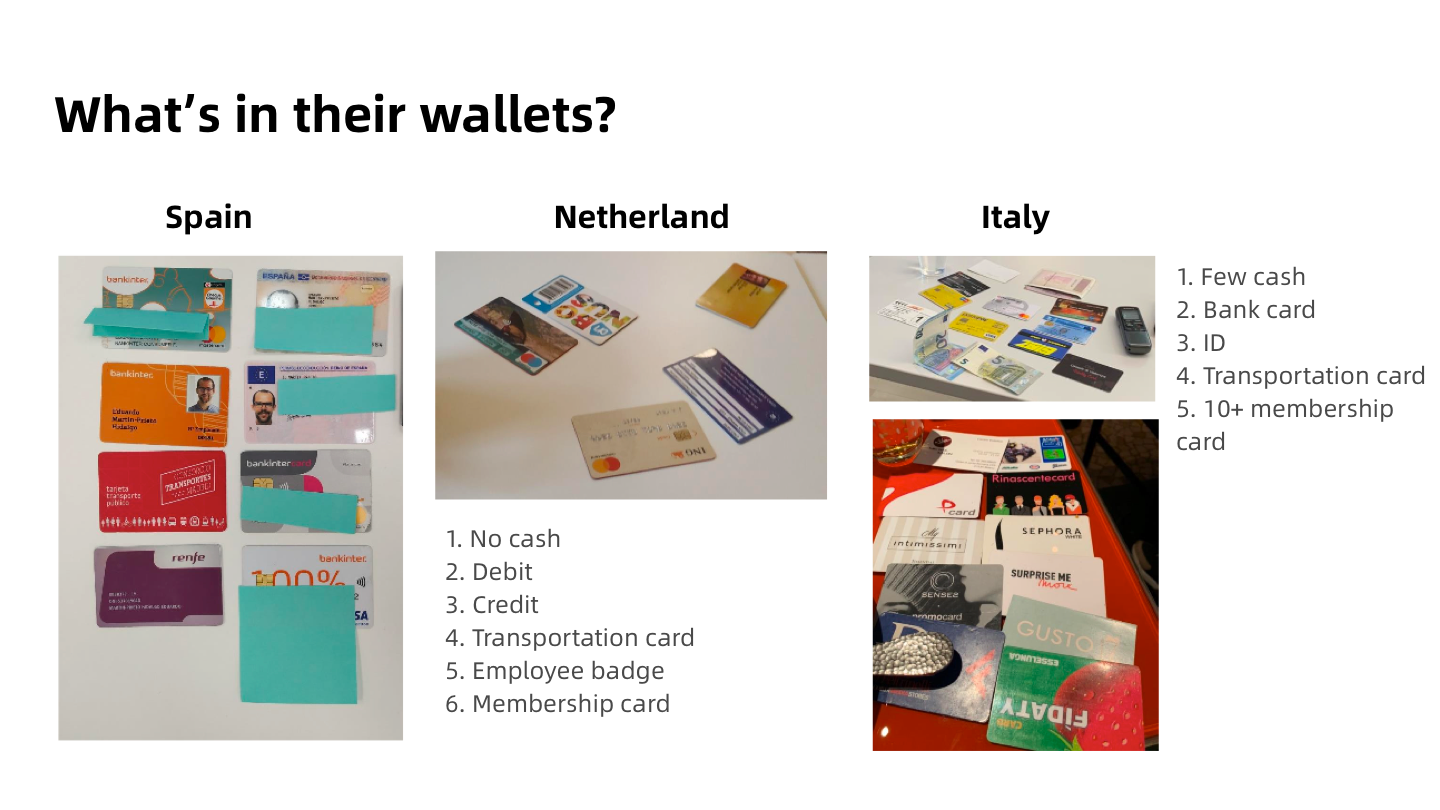
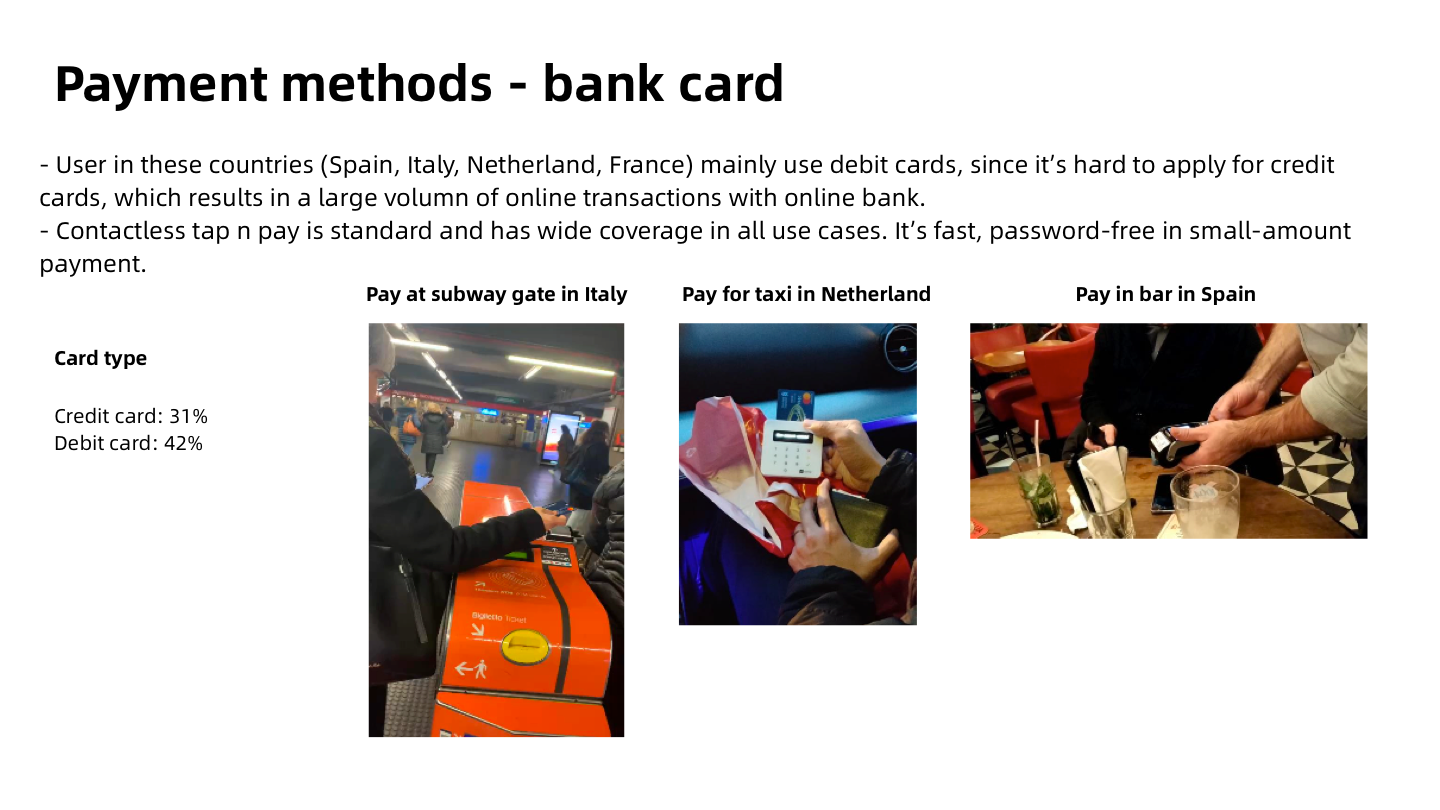
- Country specific basic facts (religion, education, internet penetration, payment method etc.)
- Market general faces (leading competitors, user habits, etc.)
- Digital wallet design (UI trend, key interaction, etc.)
Based on that, we had some ideation and generated some hi-level prototypes which we brought to local users for test.
Field research focuses on:
- End to end journey of using leading payment methods
- Local users' mental model and behavior towards digital payment and promotions (like what kind of promotion do they prefer)
- Prototype testing
- Users' diary (one entire day record with selected users)

Design principles and deliverables
After rounds of discussion and iteration, the team decided to focus on building a fast trust by reliefing users‘ alertness and lowering the cost of congnitive.
- Leverage existing brand trust from AliExpress
- End to end visibility and education
- Simplified and straightforward home design
- Simplified onboarding and KYC
The principles help users go fast from encountering the brand, trusting the brand, to understanding the functions to smoothly experiencing them. The key is the end 2 end exposure through AE app.
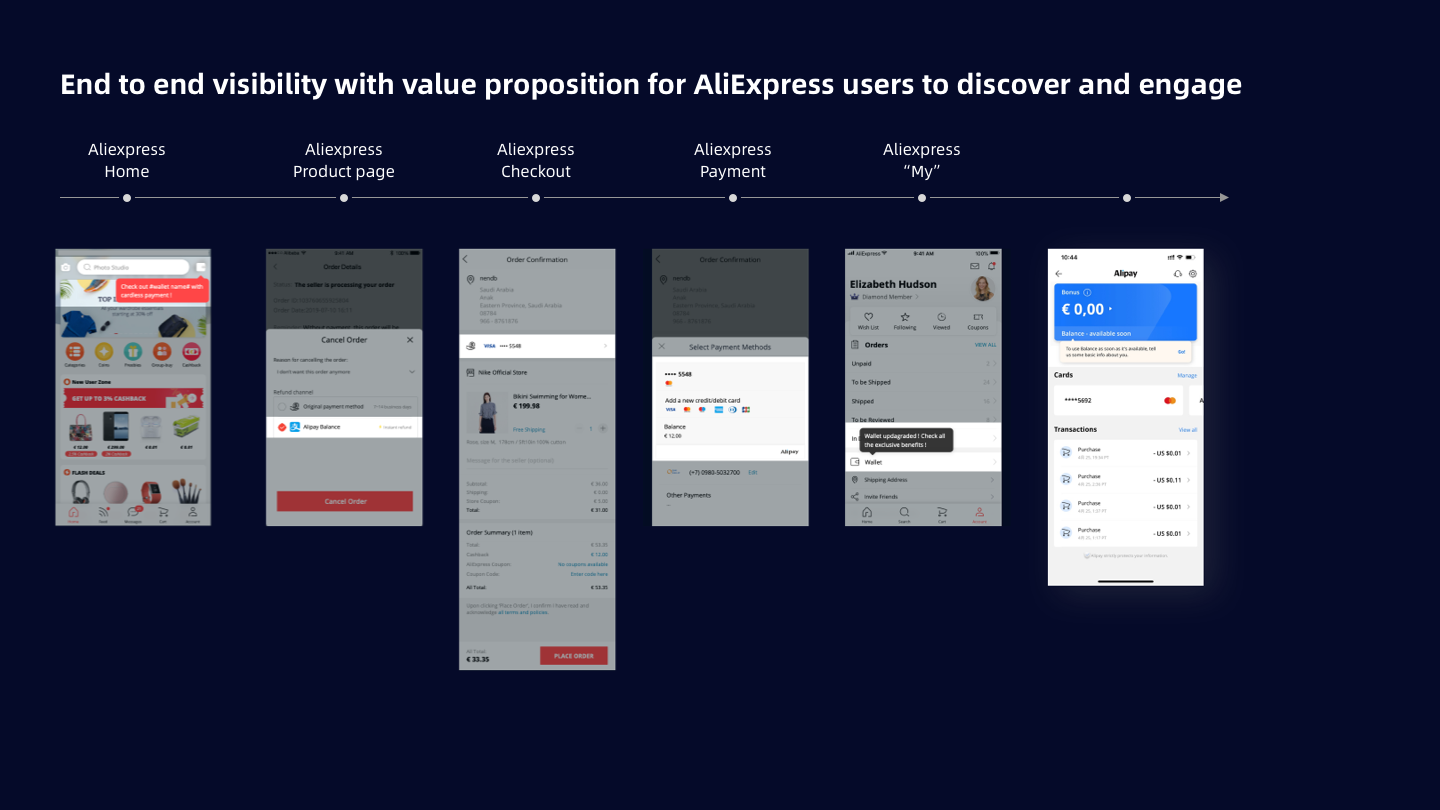
We persuaded business team to cut off a lot of features or entries planned to display in home page of the wallet, and to set up more steps of onboardng for easy understanding of each page.
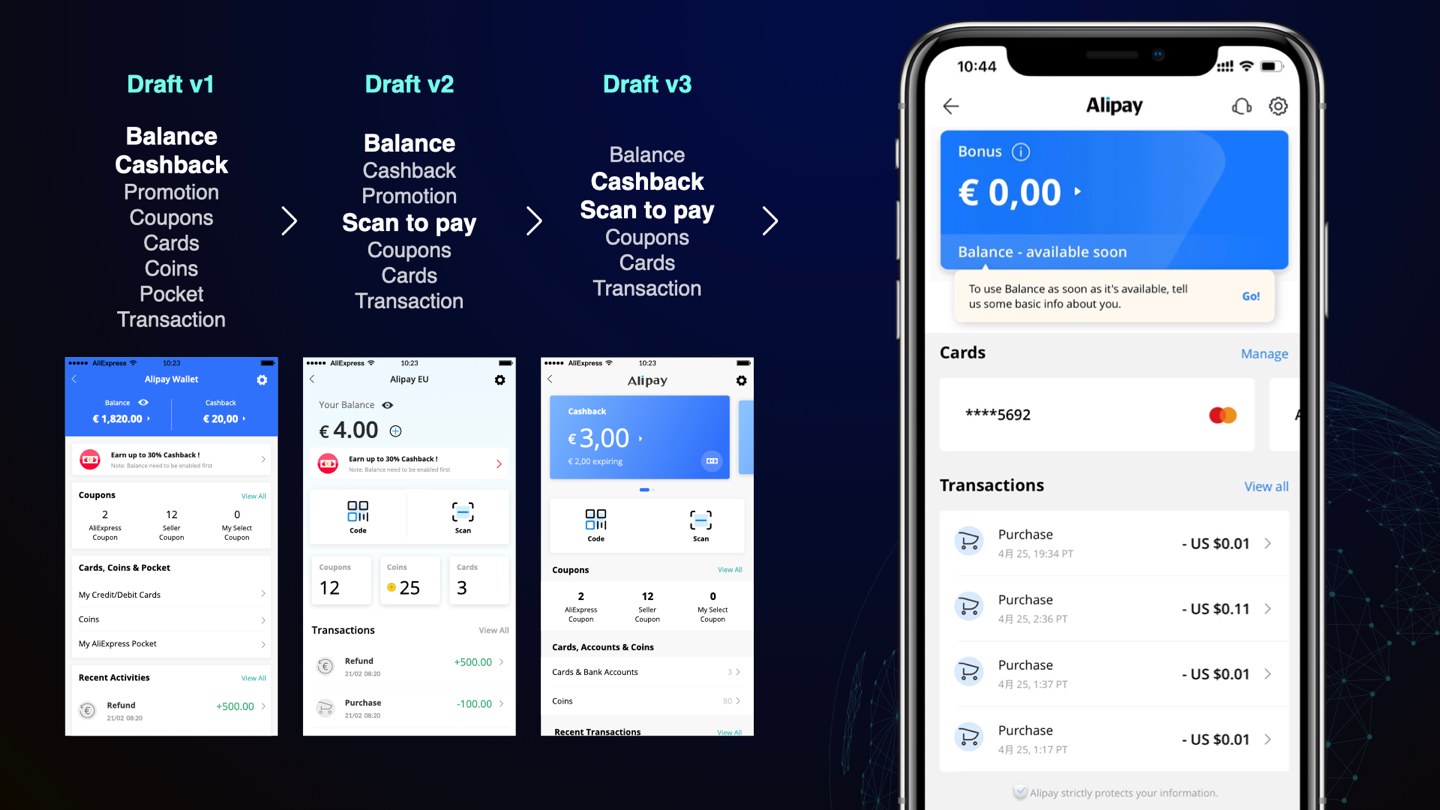

Though the Euro 2020 was postponed, we still manage to attract a lot of offline store users as the brand new users for AliExpress and thoughout the whole year, completed the Anual active user number* by 170% of original goal in 2019.
* Defined by users who activated wallet and made at least one payment in the year