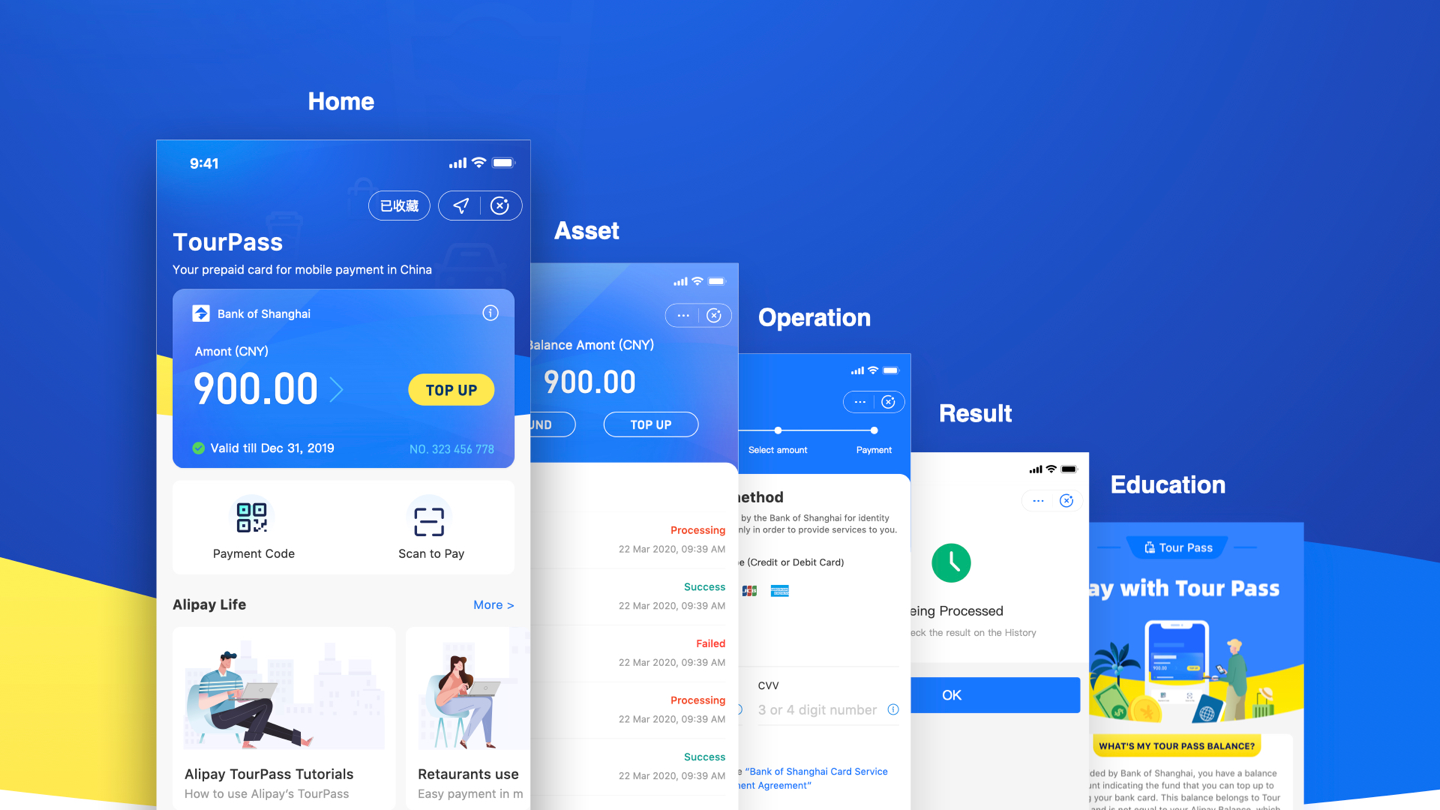
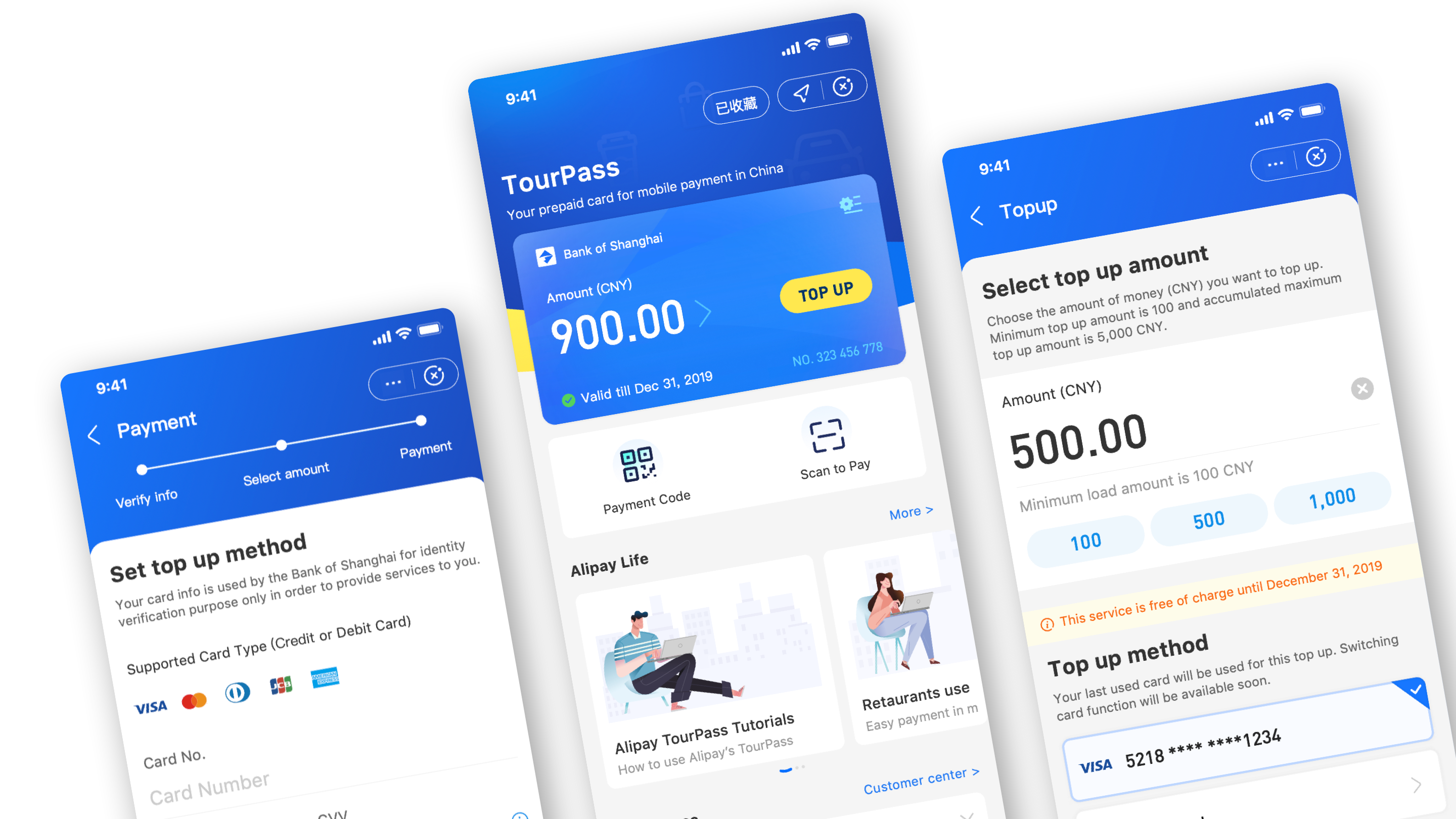
About the project
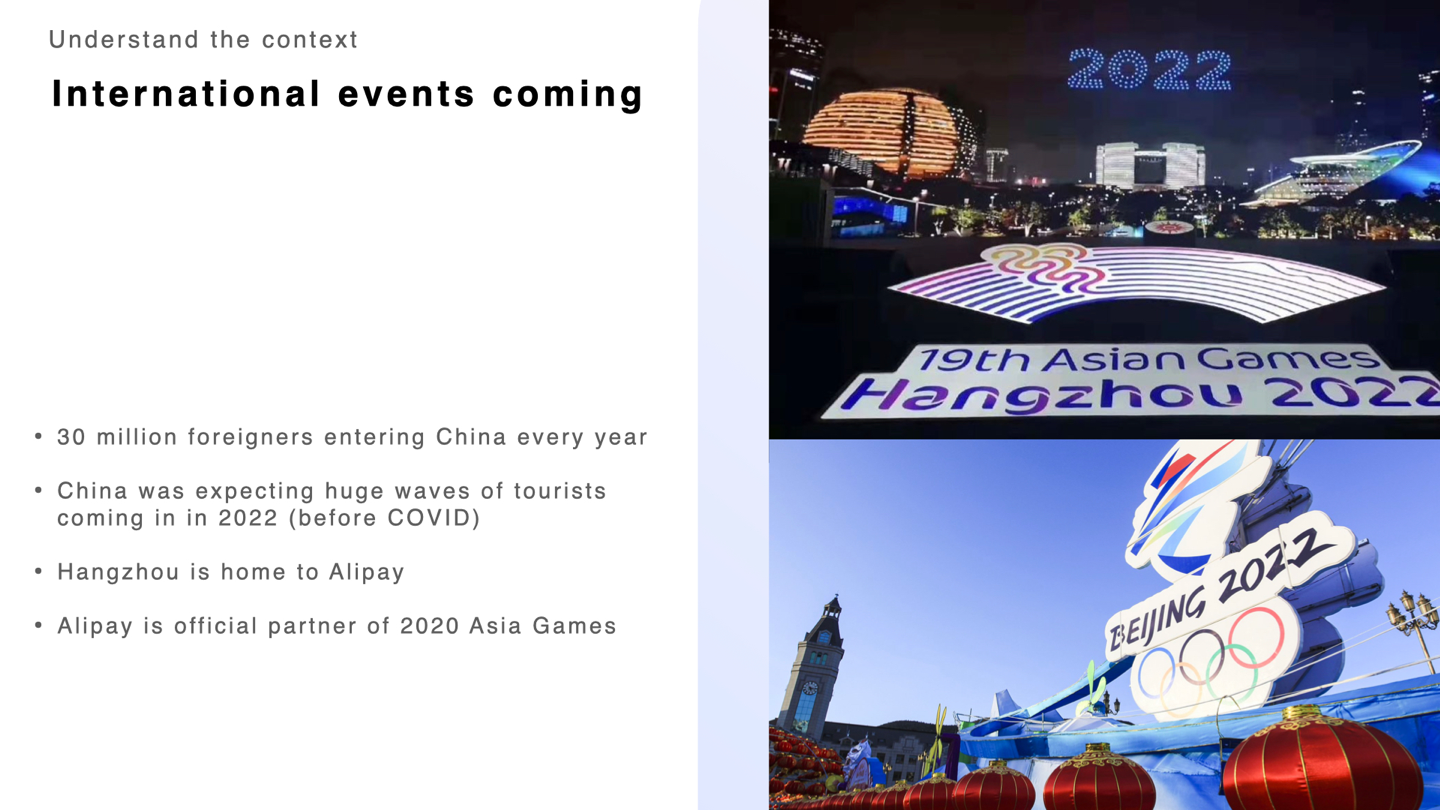
Before covid, an approxiate number of 30 million foreigners entered China every year, to travel, do business or study. International payment issuers, like Visa and Mastercard is not widely supported as China jumped over to mobile payment directly with mega player Alipay and Wechat Pay. Besides, at that time we are expecting a huger wave of tourist entering China in 2022 because of the Aisa Games to be held in Hangzhou, China (later postponed).
These enormous group of users need to make payment in China in every way. Obviously, a huge cake placed given that Alipay's headquater is also in Hangzhou.
Product and goals
Traditional card carrier versus mobile payment dominent market (over 60% usage across population), Alipay aims to provide seamless service for these foreign users to quickly adopt Alipay while not forcing themselves to change any transaction habbits. Therefore, Alipay could act as card acquirer and ads service provider to win over Tencent during the event.
Problems
It was not only a war with competitor, but also a challenge within its organization. Let's take a look at the fact:
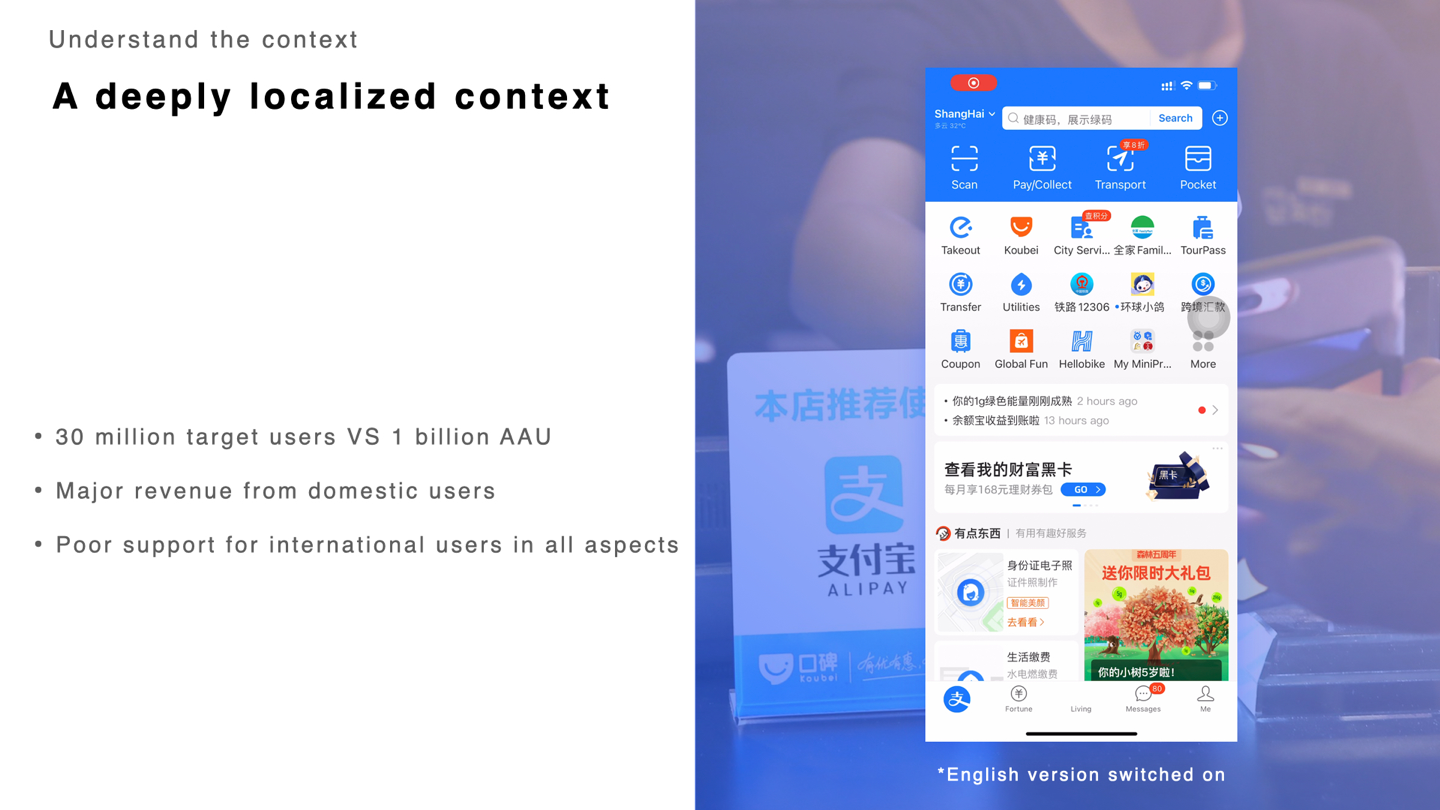
- Alipay has over 1 billion Anual Active Users while target user number for international service is somewhere over 30 million
- Alipay makes a majority of its revenue from domestic users and business
- Alipay's as-is for international users are really poor
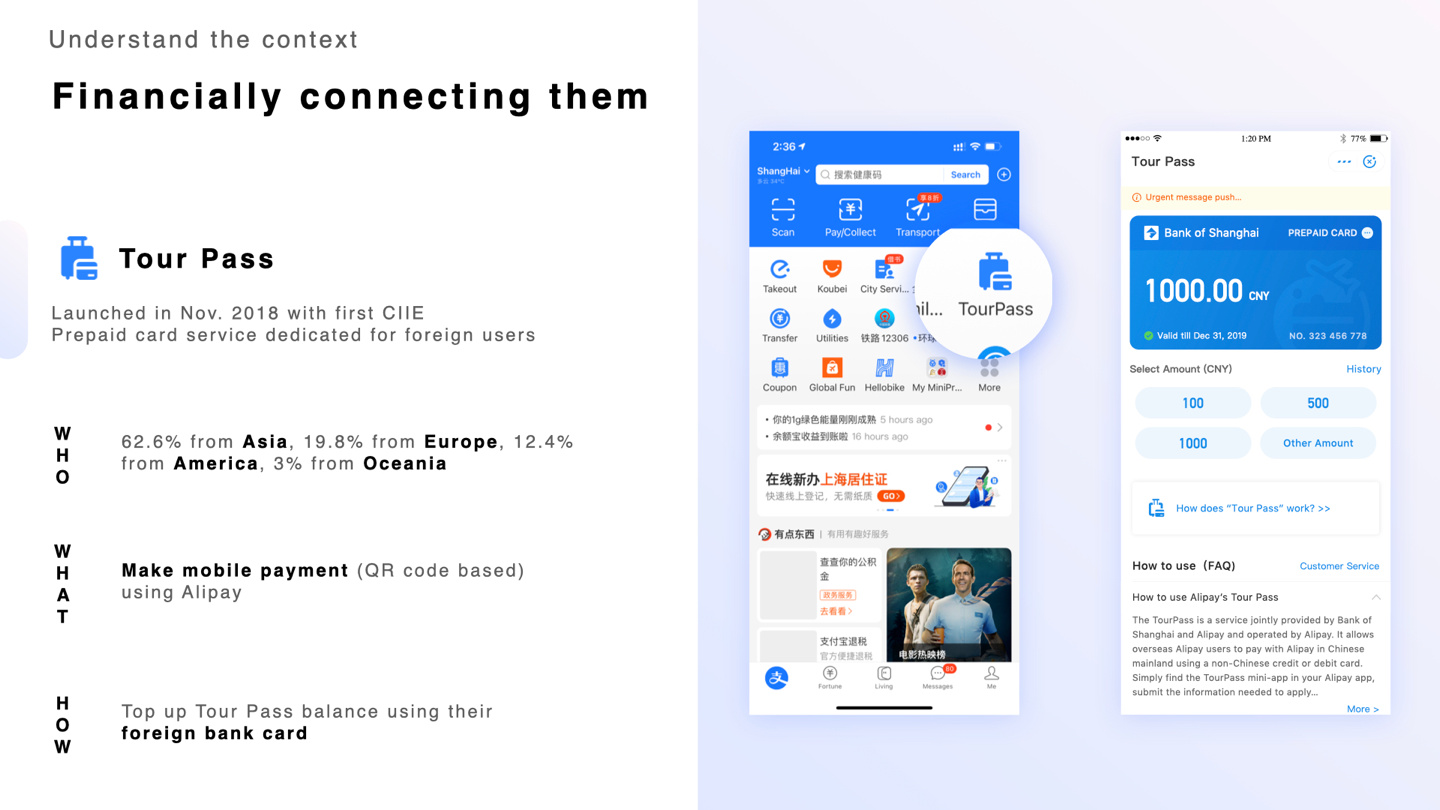
To avoid the back and forth with domestic team on changing their system and flow, the business team came across a brilliant idea of creating a dedicated app called TourPass. It is just like any other "mini-apps (delivery, shopping, ride-hailing, etc.)" on Alipay as it is a platform. With that, we could deveop the service from scratch and design it totally based on foreign users' behavior.
The first version came out in a rush and has a lot of issues. Starting from there, I joined the team and worked on improving and revamping.
Strategy and approach
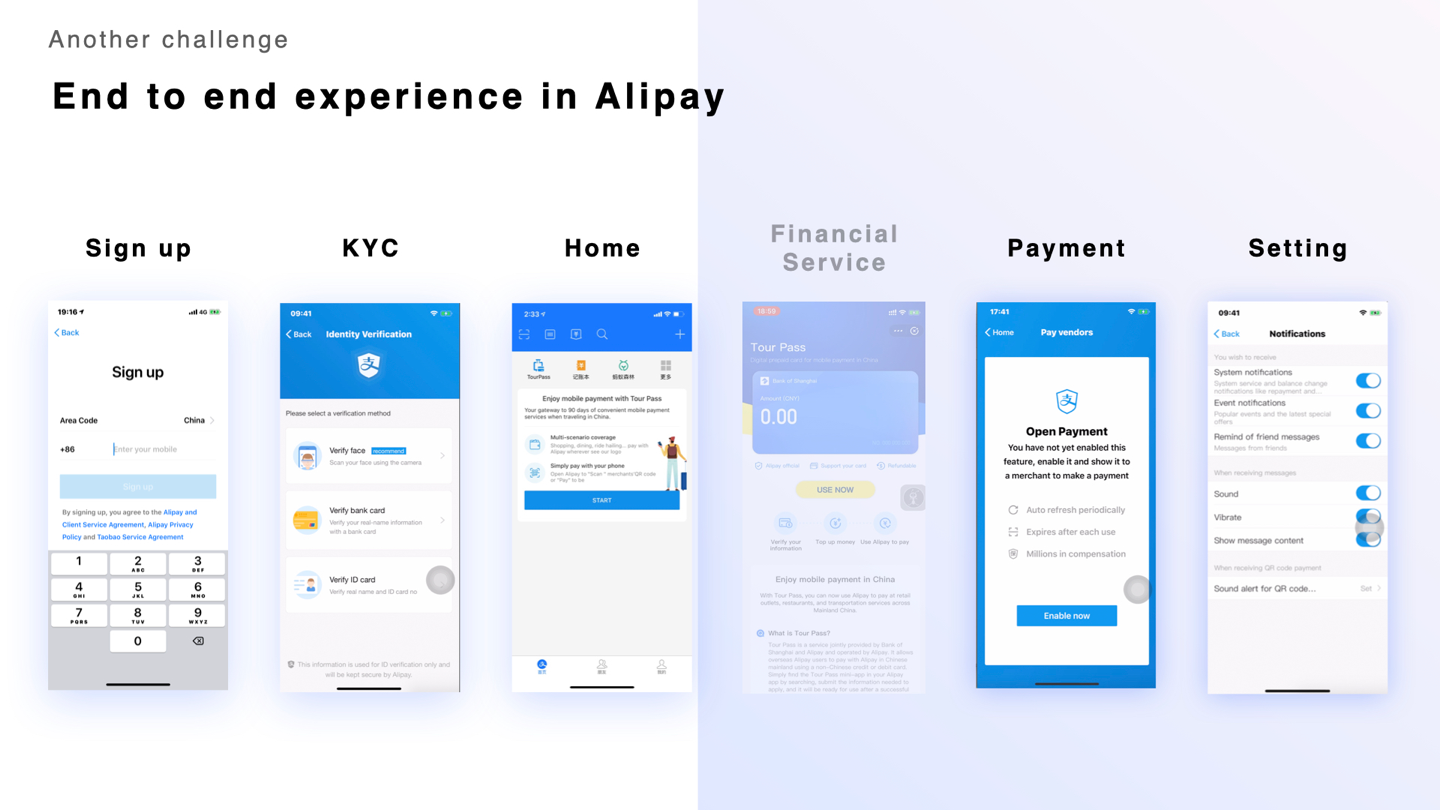
The end to end user flow goes through Alipay first and then to TourPass. Given all the restriction mentioned above, I decided to :
- Solve internal issues first (release independent from Alipay app release)
- In the meantime, start conversation with demostic team on making core flow changes (engaging high level roles)
Design principles and deliverables
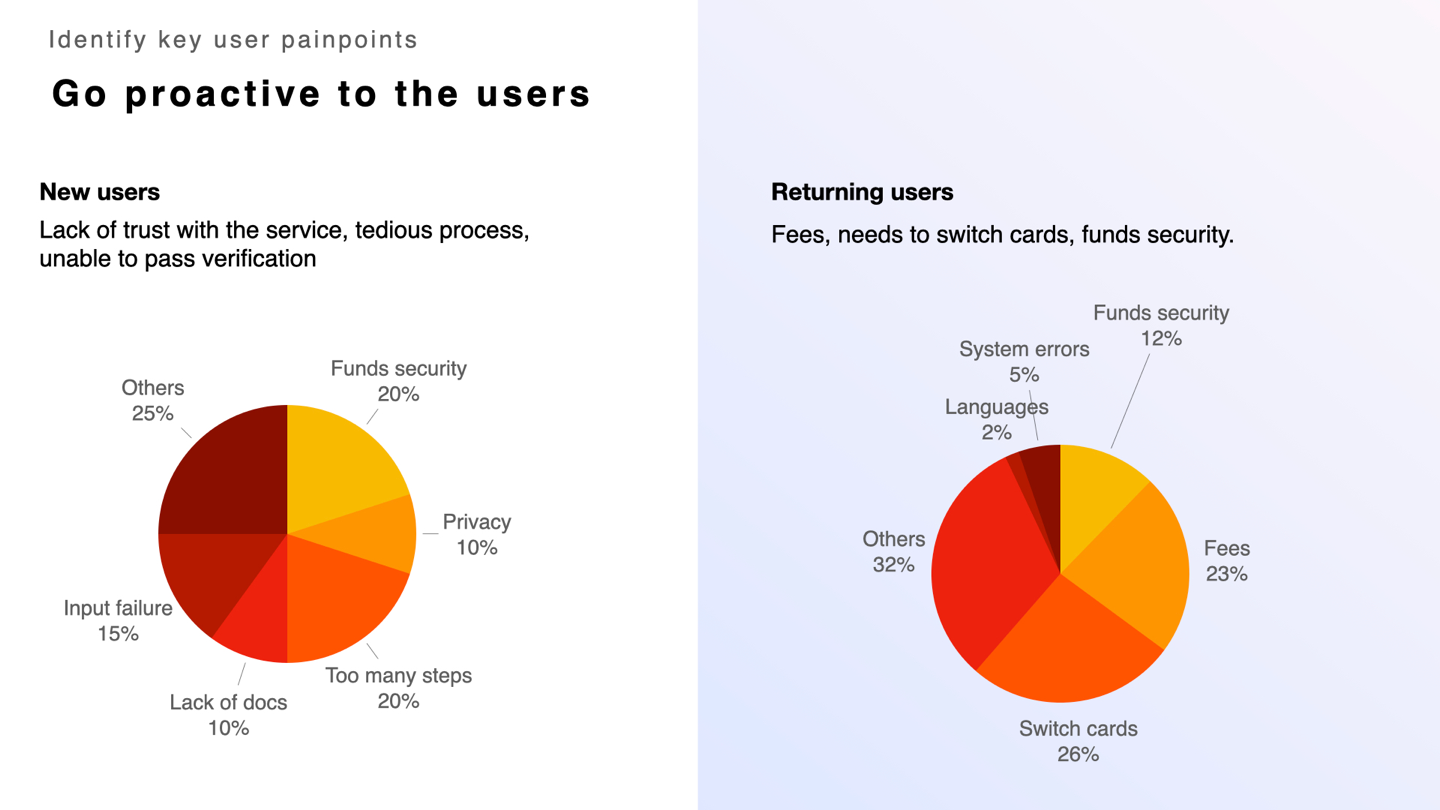
Centered around repairing the trust with users, I practised a globalization and end-to-end design principles to optimize the service.
Globalization
Not just the word itself, GLOBALIZATION means a lot more.
Starting with current data dashboard, I dived deep with customer service team on all the accurate user feedback and category and then move to understand the financial context of these users in a international scenario, because that could shape their specific mental model when making payment. A detailed list principles were then abstracted :
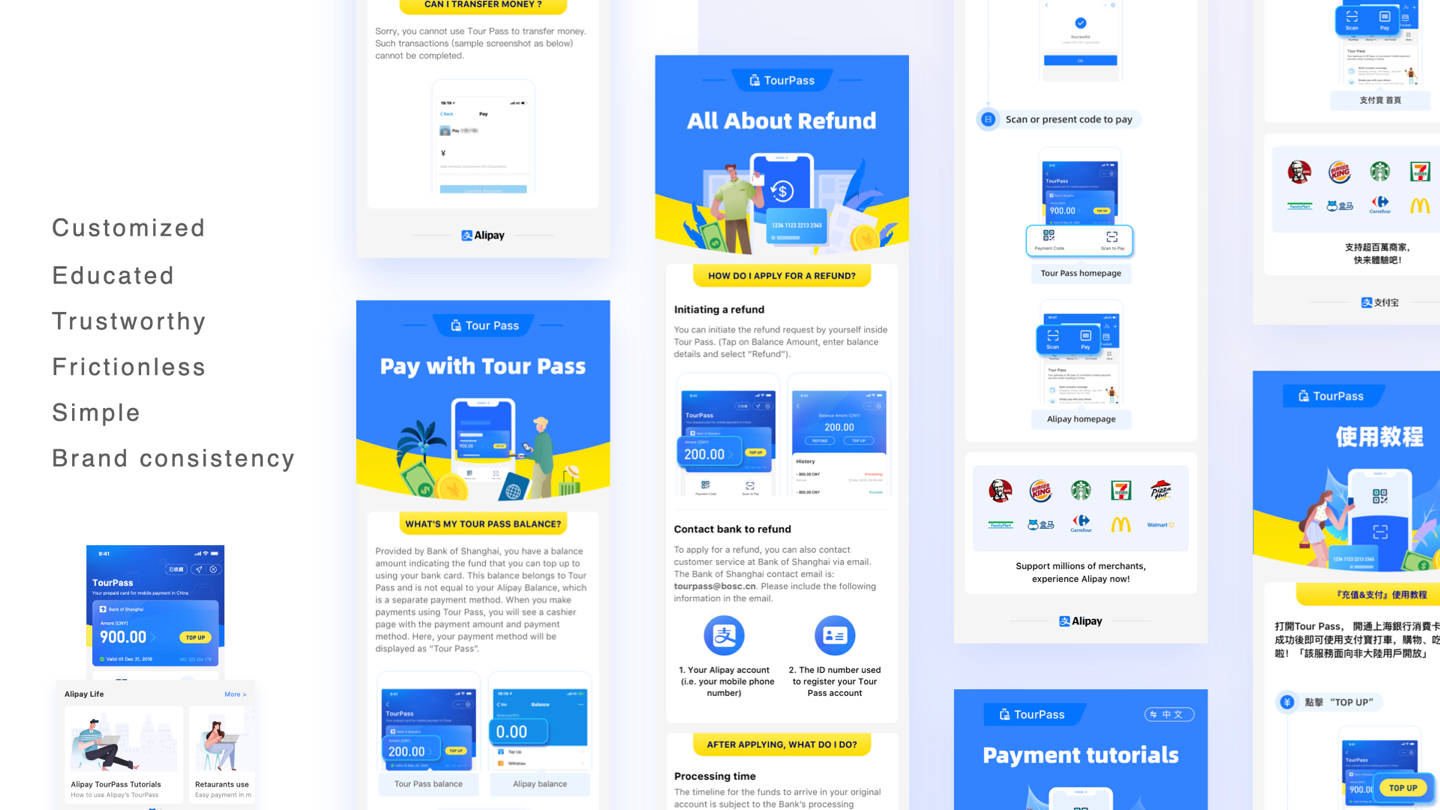
- Customized
- Educated
- Trustworthy
- Frictionless
- Simple
- Brand consistency
These principles are implemented in fuctional UX design as well as all UI elements including fonts, spacings, graphics, etc.

End to end
The conversation with Alipay domestic team is quite painful as you can imagine. On the call and on the table, we as an ecosystem service team did not get enough power to communicate equally. Luckily for us, our service is part of the "political task" and in China, this means a higher priority. So finding the right lever is critical. We push hard to find both design and business high level roles to engage their team and thigs started to be enlightful.
Later we had a virtual team working together to "debug" the end to end user experience for foreigners in Alipay and created a roadmap togehter, with which I also created some guidelines and library for future team use.
The overall result turned out to be satisfying after first release, with top up success rate in TourPass rised by 21% and complaint rate dropped by 48% (by month)